How to track hobbies you don't do every day
Some hobbies happen when the weather, your schedule and your energy line up. You might go hiking a few times one month, then not at all the next. A simple activity log lets you remember those outings without deciding how often they ought to happen.
Record each occasion and keep a note worth returning to. The useful question is often “When did I last make time for this?” rather than “Did I do it today?”
Pick activities you want to look back on
Choose a handful of things whose dates you would enjoy knowing. A broad event such as “Go hiking” shows the gap between any two hikes. A specific one such as “Walk the lakeside trail” tells you when you last visited that place.
Either approach works. Decide which question matters to you before adding a long list of routes or projects.
| Activity | A note for next time |
|---|---|
| Go hiking | Route name, starting point and a favourite stop |
| Spend an afternoon painting | Subject, materials and where you left off |
| Visit a museum | Exhibition name and something you want to read about |
| Have a day off | What you chose to do with it |
| Go on a weekend trip | Where you stayed and a place to return to |
Keep dates and memories together
In Last Time, add an event and choose its most recent date. After doing the activity again, mark it done and add a note. You can open the history to revisit earlier entries rather than replacing the previous memory with the latest one.
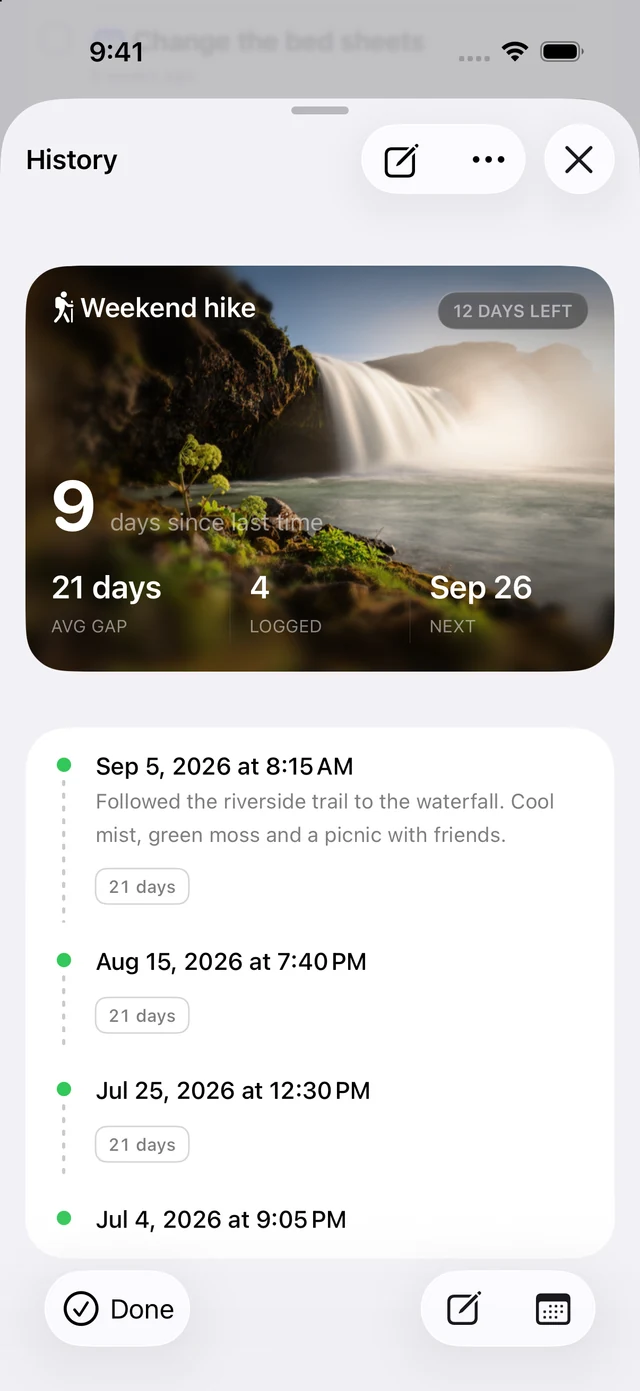
You can give an event a cover photo to make it easier to recognise. Keep the note specific to that occasion: a route you liked, a material you tried or the next small step in a project.
What counts as doing the hobby?
Use a definition that makes the log easy to maintain. If “Painting” means any session where you picked up a brush, record that. If you want the dates of finished paintings, create a separate event called “Finish a painting”.
Avoid resetting a completed-activity counter just because you planned the next outing or bought supplies. Keeping plans in your calendar and completed activities in the log makes the history easier to interpret.
Let the counter be a prompt
A long gap can remind you of something you would like to do again. It can also reflect a busy season or a change in interests. The number does not need to become a deadline.
For one old date, try the days-since calculator. For a continuing history on your iPhone or iPad, add the activity to Last Time.
If the activity usually involves someone else, you may also find a record of calls and catch-ups useful when arranging the next outing.